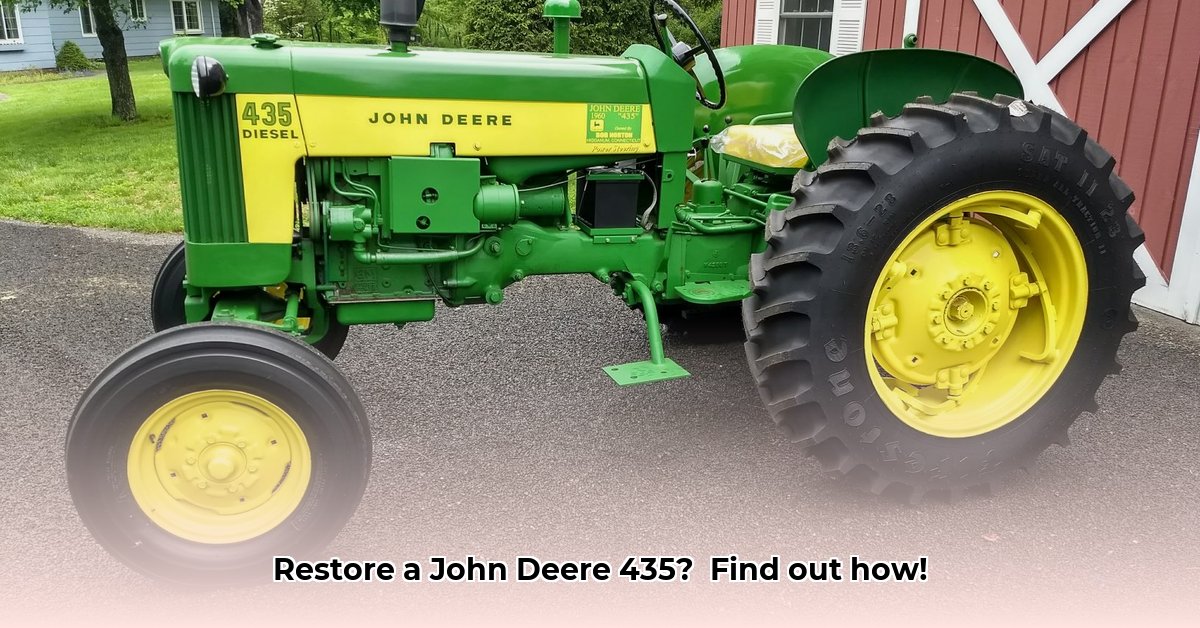
John Deere 435 Tractor: A Deep Dive into History and Restoration
The John Deere 435, produced from 1959-1960, represents a pivotal moment in agricultural engineering. With only approximately 4,600 units manufactured, it remains a highly sought-after collector's item. This wasn't simply an incremental upgrade; the 435 marked a significant shift in John Deere's approach to tractor power, incorporating new PTO (Power Take-Off) standards and a revised horsepower measurement system. Furthermore, its use of a General Motors diesel engine highlights the collaborative spirit of the era. Understanding this historical context enhances the appreciation of this remarkable machine. But how much is it worth today? Let's explore. For detailed torque specifications, check out this helpful resource: Torque Specs.
Technical Specifications: Understanding the 435's Capabilities
The John Deere 435 boasts approximately 33 PTO horsepower, a substantial output for its time. Weighing around 3200 pounds, it's a robust machine. While it featured a standard four-speed transmission, a five-speed option was also available. Locating original documentation proving these specifics can be challenging, adding to the intrigue for serious collectors. Its relatively straightforward design, however, makes it a more manageable restoration project compared to some contemporaries. However, comprehensive information remains scarce compared to more modern models; details on optional features like power steering, for example, require further research. What are some of the key features that make restoration a worthwhile endeavor?
Restoring Your 435: A Step-by-Step Guide
Restoring a John Deere 435 is a labor of love, demanding patience, skill, and a keen eye for detail. This detailed, five-step guide provides a structured approach:
Initial Assessment (Crucial): Begin with a meticulous examination, documenting mechanical issues, cosmetic damage, and missing components with photographs and notes. This forms the foundation of your restoration plan. What percentage of original components are still functional? This impacts the overall timeframe and budget.
Parts Acquisition (The Challenge): Sourcing original parts is often the most challenging aspect. Online forums, specialized vintage equipment dealers (like those specializing in antique John Deere tractors), and even scrapyards can be valuable sources. Consider 3D printing for less critical components. How can you find the best sourcing strategies for your specific budget?
Mechanical Rehabilitation (Expert Help Recommended): The engine overhaul should be prioritized. The transmission, PTO, and hydraulic systems require attention; professional assistance for these complex systems is often advisable to avoid expensive mistakes. What potential pitfalls should you be aware of during this phase?
Cosmetic Enhancement (Authenticity Matters): Once mechanical systems are restored, focus on the aesthetics. Repainting, replacing decals, and attention to external components are crucial. For collectors, authenticity is paramount, so diligent research into original color schemes and factory specifications is essential. How can you ensure your restoration maintains historical accuracy?
Testing & Documentation (Preserve Your Work): Before declaring victory, thoroughly test each system. Meticulous documentation throughout the entire process enhances the tractor's value and aids future maintenance. What crucial benefits does detailed documentation provide?
Market Value: Determining Your 435's Worth
Precisely determining the value of a John Deere 435 is complex, influenced by several factors: condition, originality, completeness, and market demand. Analyzing completed auction sales and online forums provides valuable insights. What's the most effective research strategy for pricing?
Condition: A meticulously restored tractor commands a significantly higher price than one requiring extensive repair.
Originality: Original parts are highly prized, increasing the tractor's value.
Completeness: The inclusion of original accessories, manuals, and tools significantly boosts the value.
Market Demand: Collector interest and the current market fluctuate, affecting the price. Is the market currently bullish or bearish regarding vintage John Deere tractors?
Pros and Cons of Owning a John Deere 435
Weighing the advantages and disadvantages provides a well-rounded perspective.
| Pros | Cons |
|---|---|
| Historical significance and collectibility | Difficulty in sourcing parts |
| Relatively straightforward mechanical design | Limited available information and documentation |
| Potential for value appreciation | High restoration costs and potential complexity |
| Connection to agricultural history and heritage | Requires substantial time, skill, and financial resources |
Conclusion: Is a John Deere 435 the Right Tractor for You?
The John Deere 435 offers a rewarding restoration project with potential for value appreciation. However, it's crucial to honestly assess your skills, resources, and patience. The undertaking demands a considerable investment of time, effort, and money. If you possess the passion, dedication, and a realistic plan, restoring a 435 can be exceptionally fulfilling. A detailed budget and comprehensive timeline are absolutely essential.